
The Supreme Court declined to hear a public interest litigation (PIL) seeking directions to the Election Commission and state election bodies to address purported duplication and multiple entries in voter lists. The court suggested the petitioner approach high courts with specific grievances and file representations with appropriate authorities.

He could have blazed a trail that few Indian judges had. It was a missed opportunity of a lifetime, notes Ramesh Menon.

Granting interim bail to Delhi Chief Minister Arvind Kejriwal would not amount to grant of privilege or special status to politicians, the Supreme Court on Friday said, while observing that the Aam Aadmi Party leader has no criminal antecedents and is not a threat to the society.
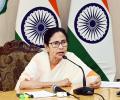
West Bengal Chief Minister Mamata Banerjee has defended her support for teachers who were dismissed following a Supreme Court verdict, accusing the BJP and CPI(M) of "hatching a conspiracy" to influence the ruling. She dared the BJP to arrest her for supporting the affected candidates, while asserting that her government will abide by the verdict but explore all legal options. The development has triggered political reactions with the BJP demanding Banerjee's resignation, while the CPI(M) expressed concern over the impact on the education system. Banerjee also criticized the BJP's handling of the Vyapam scam in Madhya Pradesh, drawing parallels to the school jobs scam in West Bengal.

The Supreme Court of India began hearing a batch of petitions challenging the constitutional validity of the Waqf (Amendment) Act, 2025. The bench, led by Chief Justice Sanjiv Khanna, asked both sides to address whether the court should entertain the petitions or relegate them to the high court. The hearing is underway with senior advocate Kapil Sibal arguing for the petitioners. The act, which was passed by Parliament following heated debates, has been challenged by various parties including AIMIM leader Asaduddin Owaisi, All India Muslim Personal Law Board (AIMPLB), and Jamiat Ulama-i-Hind.
The Supreme Court on Friday questioned the Bihar government as to why it published its caste survey data but refused to restrain it from making public further data, and said it may examine if the state has power to conduct such an exercise.

A three-judge Supreme Court bench will hear petitions challenging the constitutional validity of the Waqf (Amendment) Act, 2025, on April 16. The petitions, including those by politicians and the All India Muslim Personal Law Board (AIMPLB) and Jamiat Ulama-i-Hind, were filed in the top court challenging the validity of the newly-enacted law. The Centre has filed a caveat in the apex court, seeking a hearing before any order is passed.
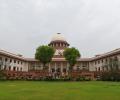
The Indian government has defended the Waqf (Amendment) Act, 2025 in the Supreme Court, arguing that there cannot be a blanket stay on the law as there is a presumption of its constitutionality. The Centre countered the pleas challenging the law's validity, asserting that the amendments were undertaken after a comprehensive study by a parliamentary panel. The government also highlighted the "reported misuse" of earlier provisions and the increase in waqf land, claiming that over 20 lakh hectares were added after 2013.

A bench of justices Sanjiv Khanna, Dipankar Datta and Augustine George Masih told the petitioners, who pointed out that a meeting for the selection of ECs was pre-poned, to file a separate application pointing out the fact.
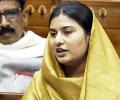
Samajwadi Party leader and Kairana MP Iqra Choudhary has moved the Supreme Court seeking effective implementation of the Places of Worship (Special Provisions) Act, 1991. This move comes amidst several petitions challenging the law's validity, including those filed by the Akhil Bhartiya Sant Samiti and lawyer Ashwini Upadhyay. The Supreme Court, in December 2022, had restrained all courts from examining fresh suits and passing interim orders in pending cases seeking to reclaim religious places. The Act aims to maintain the religious character of places of worship as they existed on August 15, 1947, but the dispute relating to Ram Janmabhoomi-Babri Masjid at Ayodhya was kept out of its purview. The court has listed Choudhary's plea with other pending pleas for February 17.
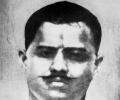
Standing near the noose, he recited a couplet in which he said he wished nothing but to sacrifice his life for the motherland. Utkarsh Mishra remembers Ram Prasad Bismil on the revolutionary leader's 128th birth anniversary.
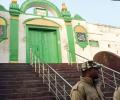
The Uttar Pradesh government has informed the Supreme Court that the disputed "private well" near the Mughal-era Jama Masjid mosque in Sambhal was situated on public land. The state government said the petitioner failed to disclose there was a well within the boundary walls of the mosque known locally as "yagna koop". The committee, in a spot inspection, found that the well was situated outside the mosque boundary wall, the report said. The report said the state was committed to ensuring peace and harmony in the region and any restraint on the use of such public wells by the community at large may not help in achieving that goal.

The Supreme Court of India expressed concern about the "criminalization of politics" and questioned how convicted individuals can return to Parliament. The court sought the assistance of the attorney general on this issue, highlighting the apparent conflict of interest and the need for clarity on the Representation of People Act's provisions. The court also raised concerns about the slow pace of trials against lawmakers, with a significant number of cases pending. The issue has been referred to a larger bench for consideration.
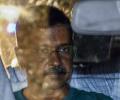
A bench of justices Sanjiv Khanna and Dipankar Datta referred to a larger bench, preferably of five judges, for in-depth consideration of three questions on the aspect of "need and necessity of arrest" under the Prevention of Money Laundering Act (PMLA).

The Supreme Court has sought details from the Allahabad High Court regarding controversial statements made by Justice Shekhar Kumar Yadav at a VHP function. The development comes amid calls for action against the judge for his remarks, which have been labeled as hate speech by some. The judge's statements were made at a VHP function on December 8, where he spoke about the Uniform Civil Code and the law working according to the majority. Several individuals and organizations, including lawyer Prashant Bhushan and CPI(M) leader Brinda Karat, have called for an inquiry into the judge's conduct and for his removal from judicial duties.
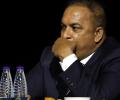
A former cricketer, Devajit Saikia represented Assam in four first-class matches during the 1990s before transitioning to cricket administration.
A bench comprising Chief Justice Sanjiv Khanna and Justice Sanjay Kumar also indicated that it may not take up the pending scheduled petitions, heard earlier by a three-judge bench, during the day as it was sitting in a combination of two judges.

The Supreme Court of India has extended its stay on a court-monitored survey of the Shahi Idgah Mosque complex in Mathura, which is located adjacent to the Krishna Janmabhoomi temple. The court deferred the hearing on a plea against the survey to April 1, while the interim order staying the survey will continue to operate. The Hindu side claims that the mosque complex holds signs of a temple that once existed at the site, while the Muslim side contends that the lawsuits filed by the Hindu litigants violate the Places of Worship (Special Provisions) Act of 1991.
A court in Budaun will decide on December 24 whether to proceed with a hearing in the Jama Masjid Shamsi versus Neelkanth temple case. The dispute arose in 2022 when a Hindu group claimed the temple existed at the mosque site and sought permission to worship. The Supreme Court recently restrained all courts from entertaining and passing any orders on lawsuits seeking surveys of religious places under the Places of Worship (Special Provisions) Act, 1991. The Muslim side argues that the lower court should not proceed with the hearing as it cannot pass any orders, while the Hindu side maintains the Supreme Court order does not stop the hearing. The court will now decide whether to continue the proceedings.
Justice Khanna said, "We are leaving it to the CBI to act in accordance with law."

The Supreme Court on Friday said the plea seeking a policy for verification of electronic voting machines should go before the same bench that delivered a verdict in April rejecting the demand for bringing back the old paper ballots.

The Supreme Court on Wednesday ordered the deletion of advocate Bansuri Swaraj's name from its order of granting bail to AAP leader Sanjay Singh after the Enforcement Directorate said her name got added to the list due to an "inadvertent error".
The Supreme Court of India will likely hear a batch of petitions challenging the constitutional validity of the Waqf (Amendment) Act, 2025 on April 15. The Act, which came into force on April 8, has been met with widespread criticism from various stakeholders, including politicians, the All India Muslim Personal Law Board (AIMPLB), and Jamiat Ulama-i-Hind. They argue that the law is discriminatory and violates the fundamental rights guaranteed under Articles 25 and 26 of the Constitution. The petitions allege that the amendments give the government more control over the administration of Waqf, effectively sidelining the Muslim minority from managing their own religious endowments.

The bench gave liberty to Mukerjea to approach the trial court
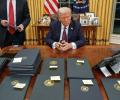
Indians are the main beneficiaries of the H-1B visas, which bring in the best of the talent and brains from across the world. Highly skilled professionals from India walk away with the overwhelming number of H-1B visas - which is Congressional mandated 65,0000 every year and another 20,000 for those who received higher education from the US.

Terming as 'unfortunate' the January 29 stampede at Maha Kumbh where at least 30 people were killed, the Supreme Court on Monday refused to hear a public interest litigation (PIL) for guidelines over safety of devotees and asked the petitioner to move the Allahabad high court instead.
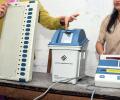
The Supreme Court of India has sought a response from the Election Commission of India (ECI) regarding pleas seeking verification of burnt memory and symbol loading units in Electronic Voting Machines (EVMs). The court directed the ECI to refrain from erasing or reloading data during the verification process and to explain the procedure adopted for verification. The bench also expressed concerns over the high cost of verification and directed the ECI to reduce the fee. The court's directive comes following its previous judgement where it allowed aggrieved candidates to seek verification of EVMs.

The Supreme Court on Friday refused to entertain a plea of self-styled godman Asaram, serving life term in a rape case, for suspension of the sentence because of his deteriorating health condition.
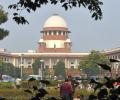
The Supreme Court of India has sought the Indian government's response to a petition filed by a Muslim woman seeking to be governed by the Indian succession law instead of Shariat. The woman, Safiya P.M., argues that she does not believe in Shariat and wants to be governed by secular law, including the Indian Succession Act of 1925. The court has asked the government to file a counter affidavit within four weeks.
In a viral video of the court proceedings, the judge was seen reprimanding a woman lawyer on Thursday and reportedly made some objectionable comments.

'There are certain characters that, when you get the opportunity to play them, you feel scared, wondering if you will be able to do justice to them.' 'That fear comes from knowing how deeply sentiments and faith are attached to such roles.'

'He used to do his homework before singing a song.' 'He used to find out who the hero of the movie would be or the situation in which the song would play in the film.' 'Accordingly, he moulded his voice.' 'For example, he sang Tel Maalish and Main Bambai Ka Babu for Johnny Walker in Johnny Walker style.' 'He would sing in different tones for Shammi Kapoor, Dilip Kumar and Guru Dutt.'
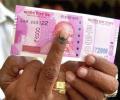
The Supreme Court of India on Wednesday said the problem with electoral bonds scheme is that it provides for "selective anonymity" and "selective confidentiality" as the details are available with the State Bank of India (SBI) and can also be accessed by the law enforcement agencies.
There is nothing "fundamentally inconsistent" with a minority institution being an institution of national importance (INI), the Supreme Court said on Wednesday while hearing arguments on the vexed issue of minority status to Aligarh Muslim University (AMU).
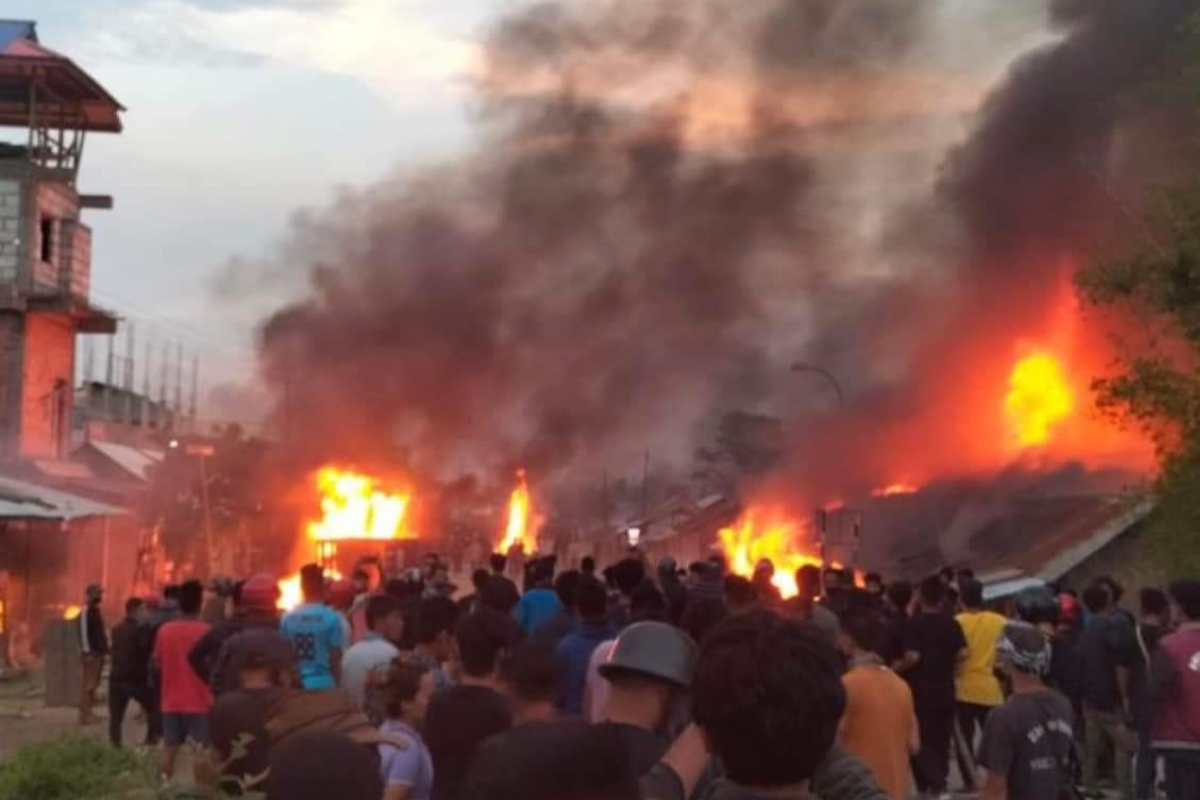
The top court asked the state government to spell out details of its actions taken against the culprits and the encroachers.
A bench of Justices Sanjiv Khanna and Dipankar Datta issued notice to the Centre on a plea filed by an NGO, Association for Democratic Reforms, and listed the matter along with other pending petitions on the issue for hearing in April.
The Supreme Court of India is scheduled to hear a batch of petitions challenging the validity of certain provisions of the Places of Worship (Special Provisions) Act, 1991, which prohibits lawsuits to reclaim a place of worship or change its character from what prevailed on August 15, 1947. The pleas, including one filed by Ashwini Upadhyay, argue that these provisions violate the right to judicial remedy and create an arbitrary cut-off date. The matter will be heard in the backdrop of several ongoing cases related to places of worship, including the Gyanvapi Mosque in Varanasi and the Shahi Idgah Mosque in Mathura. The Muslim side has cited the 1991 law to argue that such suits are not maintainable. The Supreme Court had previously sought the Centre's response to Upadhyay's petition, which alleged that the law creates an "arbitrary and irrational retrospective cut-off date" for maintaining the character of places of worship.

Aligarh Muslim University is not a minority educational institution, Supreme Court's Justice Dipankar Datta said on Friday and noted had it not been a "race against time" he would have articulated better in his dissenting opinion. The judge also flagged a non-exchange of ideas and opinions in a "true democratic spirit" to build a consensus.
The Supreme Court of India will hear a plea from the mosque management committee challenging an order rejecting its petition in the Krishna Janmabhoomi-Shahi Idgah dispute in Mathura, Uttar Pradesh on January 15. The Allahabad High Court had rejected the mosque committee's plea, stating that the religious character of the Shahi Idgah mosque needed to be determined. The case involves claims that the mosque was built after the demolition of a temple, a claim disputed by the mosque committee. The Supreme Court will now decide on the maintainability of the mosque committee's plea.
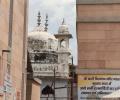
The Supreme Court's 2023 order refusing to stay a scientific survey at the Gyanvapi Mosque complex has sparked claims over several other disputed places of worship across India. This has led to several court cases, including one in Mathura where a survey of the Shahi Idgah Mosque complex was ordered, and another in Ajmer where a claim was made that a Shiva temple existed within the dargah of Sufi saint Moinuddin Chishti. The article also highlights a dispute over the Bhojshala in Madhya Pradesh, which Hindus consider a temple and Muslims consider a mosque. The Supreme Court's order has reignited debates about the Places of Worship (Special Provisions) Act, 1991, which prohibits the change of character of religious places as they existed on August 15, 1947.
